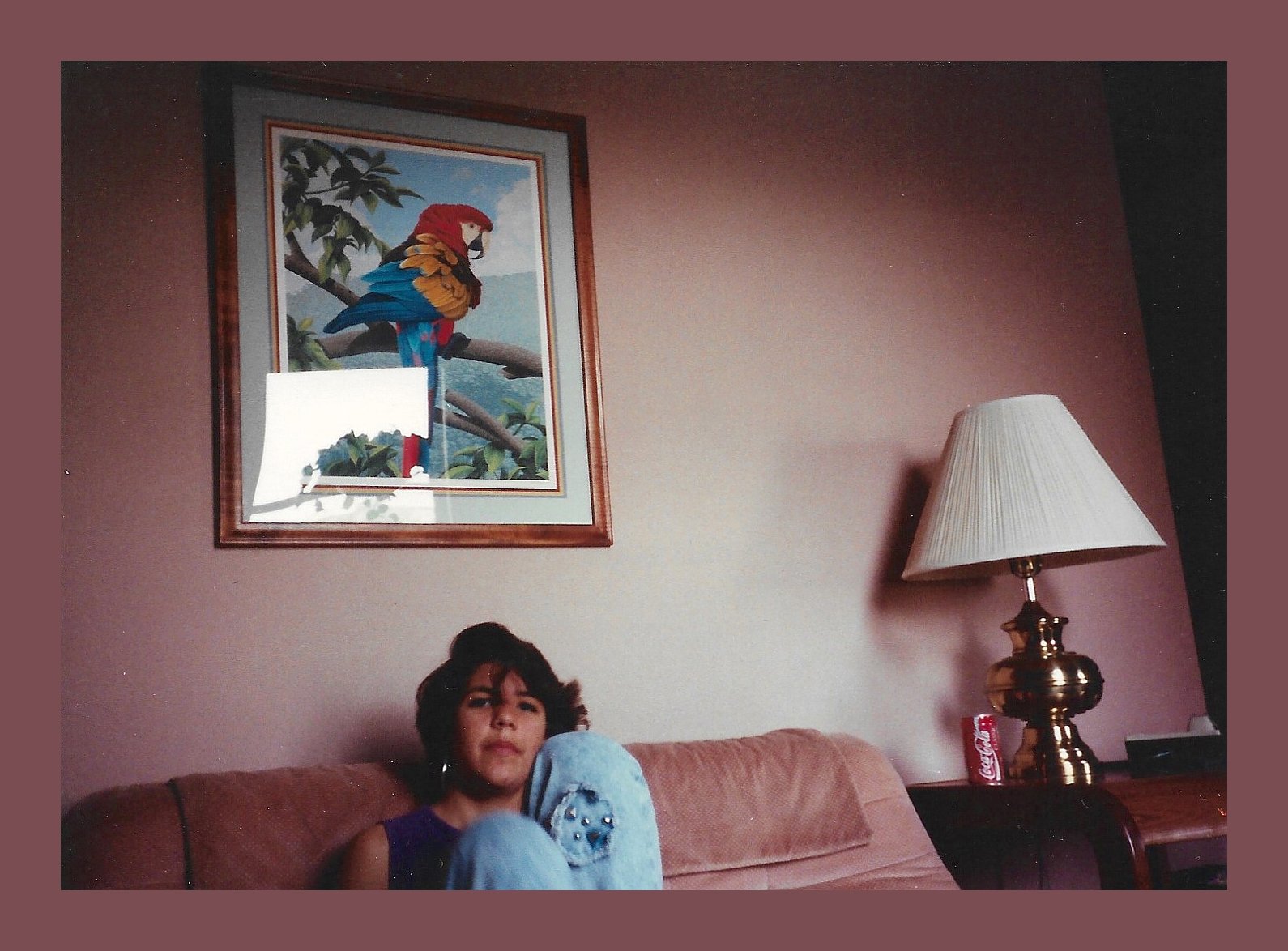
Founder, Christianne Ebel, age 11, at the Ronald McDonald House in Philadelphia. Circa 1989The Glimmer Portrait Project is rooted in its founder Christianne Ebel’s lived experience with childhood illness.
When Christianne was very young, she believed wholeheartedly in magic and possibility. Her favorite superhero was Wonder Woman, and she wore the costume everywhere, the red boots, gold lasso, and most of all, a full conviction that courage and transformation were real. There is a photograph of her from that time, standing next to her Chilean grandfather, that has stayed with her for decades as a reminder of what it meant to feel powerful, seen, and full of wonder and magic.
That feeling changed when her older brother became seriously ill, and her family spent a year navigating hospitals, uncertainty, and the suspended world that forms around pediatric illness. They lived for months at the Ronald McDonald House in Philadelphia, a place where fear, hope, exhaustion, and small moments of light existed all at once.
During that time, Christianne often felt invisible, both overwhelmed by what was happening and unable to name her own feelings. She remembers finding a small “I need attention!” pin and wearing it constantly. It was the closest she could come to expressing what she didn’t know how to say: I’m here, too.
Someone at the Ronald McDonald House eventually handed her a small point-and-shoot camera. She began photographing hallways, corners, the quiet moments between the people around her, and the attempts at normalcy threaded through the chaos. When her brother died, those photographs became her way of understanding grief, memory, and the tenderness that illness can’t erase. They taught her that photography could hold what words could not.
The Glimmer Portrait Project grew out of that beginning.
It is shaped by what Christianne lived as a child: what it feels like to be scared, to be resilient, to be overlooked, to need connection, and to want to be seen as more than the situation your family is in. The project continues that early witnessing, offering families the thing she needed most then: a moment of gentleness, recognition, agency, and light.
As an adult and a photographer, Christianne would come to understand these experiences through the lens of photographic theory, how portraits construct identity, how images become vessels of memory, and how representation shapes the stories families carry forward. She has often wondered what a portrait of herself at eleven, in the thick of her brother’s illness, perhaps even dressed as Wonder Woman, might have offered her. She thinks, too, about what a portrait experience might have given her family: not only in that moment, but in the years that followed, long after the illness ended. These questions continue to guide Glimmer’s ethos, grounding the project in both lived experience and the generative possibilities of photographic practice.